The comparison
Campo or classical dressage
Doma vaquera and classical dressage both appear at the ranch show. How they differ, what to watch for in each, and why the same breed does both.
Book the ranch show ↗Quick answer
Campo dressage, called doma vaquera, is the working riding of Spain's cattle country, while classical dressage is horse training pursued as an art in an arena. The ranch lists both: doma vaquera, which it calls cowboy dressage, and classical dressage on a purebred Spanish horse. Expect the first to look like cattle work, with a pole and quick turns, and the second like set, collected movements. Wikipedia treats them as distinct disciplines, and the Andalusian breed has been used for both.
The short answer
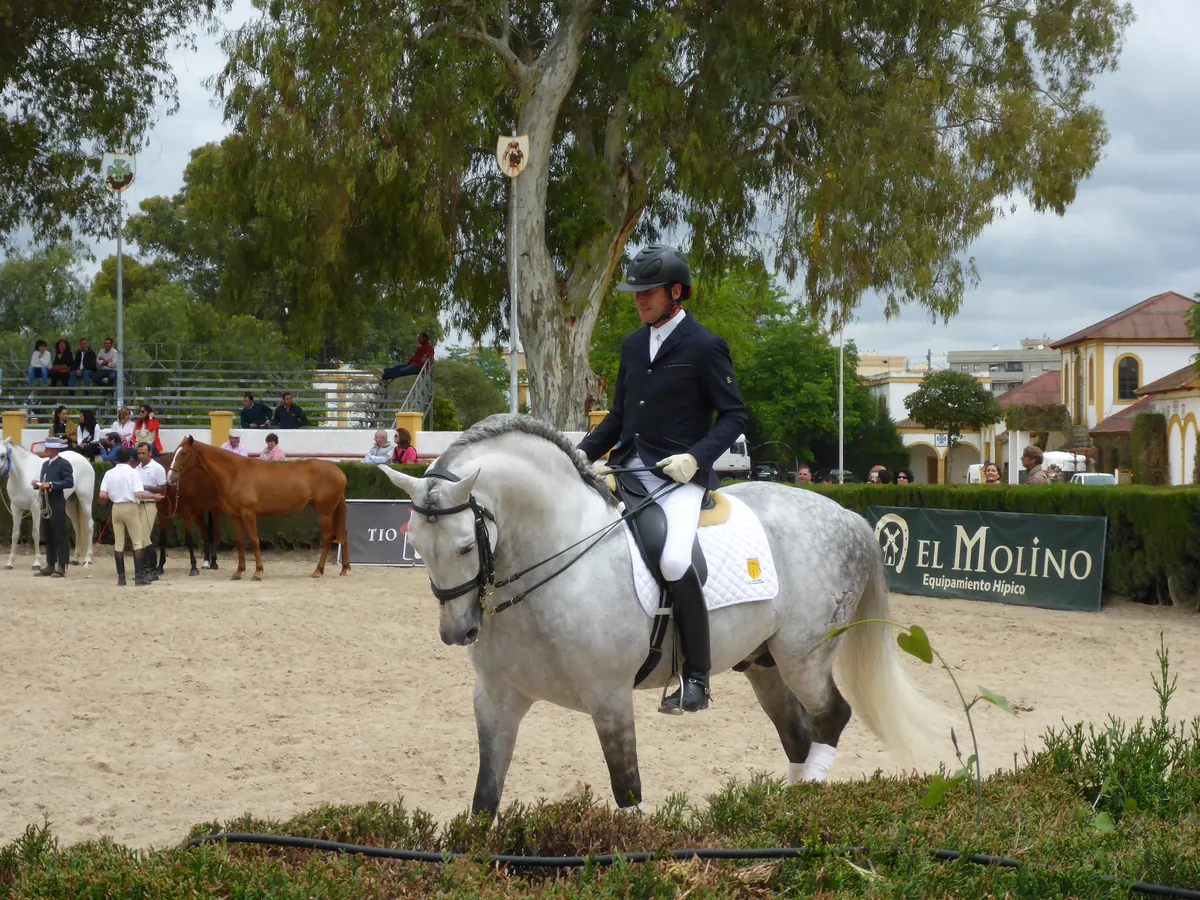
Both are riding, and at this show you may see both, but they come from different jobs. Doma vaquera grew from the work of herding and handling cattle, so its movements serve a task. Classical dressage grew from the schooling of horses as an art, so its movements serve the horse's balance and the rider's control. The ranch's own list names one of each, in that order: doma vaquera, then classical dressage with a purebred Spanish horse. The rest of this guide explains what separates them so you can recognise each from the grandstand.
Where campo riding comes from
Wikipedia calls doma vaquera the traditional working riding discipline of Spain and says it rests on two earlier riding methods. A la brida is an old riding school with long stirrups, straight legs and a saddle with a high pommel and cantle, typical of heavy cavalry. A la jineta is a method with shorter stirrups and bent legs, typical of light cavalry. Doma vaquera, the article says, is distinct from classical Spanish haute école. The word vaquera points at the vaquero, the herdsman, which is why the ranch glosses the term as cowboy dressage.
Where classical dressage comes from
Wikipedia describes dressage as horse riding performed in exhibition and competition, and as an art pursued for the sake of mastery. It traces the discipline to the writings of Xenophon and to the Renaissance, when Federico Grisone published his book of riding rules in 1550. Apart from sport, the article says, there is a tradition of classical dressage in which traditional training is pursued as an art form. That is the spirit of the item the ranch lists as classical dressage: a horse and rider shown at their schooling rather than at their work.
The tools: the pole and the saddle
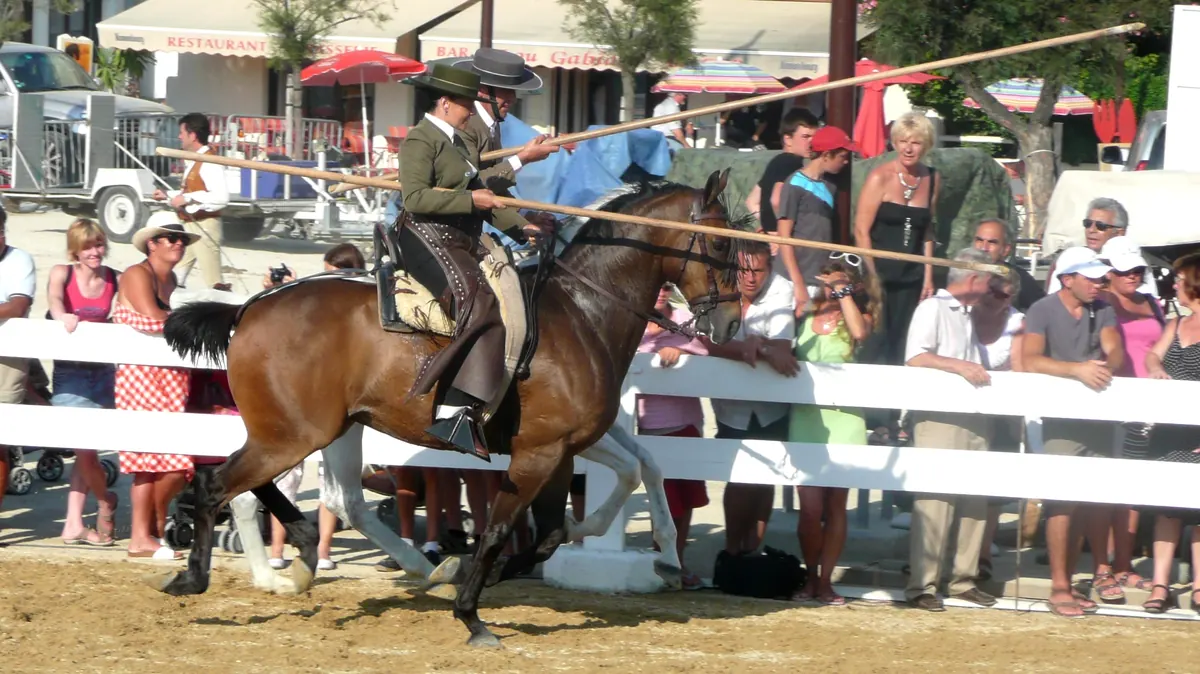
The clearest visual clue to the campo is the long pole. Wikipedia's article on acoso y derribo, a sport in the doma vaquera tradition, names it as the garrocha, a lance that riders use to bring cattle to the ground. In the photograph above a rider holds one at a doma vaquera demonstration. In dressage competition, by contrast, judges score each movement the horse performs. If a rider is working with a pole, you are watching the campo side of the programme.
What classical dressage asks of the horse
Wikipedia's dressage article lists movements from the top level of competition. The piaffe is a calm, collected, elevated trot in place. The passage is a very collected trot with great elevation, in which the horse seems to pause between strides. Collection itself is a shortening of the stride, the hindquarters carrying more weight, with the tempo unchanged. Pirouettes are turns in place, usually at the canter. A show at a ranch is not a competition test, so it will not run a fixed list, but these are the shapes to look for when classical work appears.
Why the Andalusian does both
Wikipedia says the Andalusian, or Pure Spanish Horse, has been selected over centuries for athleticism and stamina, and was originally used for riding in the dressage arena, in harness, in the bullring and with cattle. Modern Andalusians are used for dressage, show jumping and driving. That range is why a ranch that works cattle and also keeps dressage horses can put one breed to both tasks. The ticket for this show names the Domecq family's Andalusian horses and says they perform classical and countryside dressage.
How the ranch frames the horses
The ranch's own page describes the show as an introduction to one of the best kept secrets of Andalusian culture: the breeding and selection of the fighting bull and the taming of the Andalusian horse. That wording matters for how you watch. The horses are shown as part of ranch life, alongside the bulls and cattle, and not as the sole subject. The ticket, too, calls them the famous horses of the Domecq family. Expect riding that sits inside a farm's story, with explanations, rather than a stand-alone equestrian performance with its own stage and programme.
Three clues for telling them apart
These clues come from the sources, not from any promised running order, and they will not cover every moment.
- A long pole in the rider's hand points to the campo, where Wikipedia places the garrocha
- Cattle in the arena with the riders point to working rather than schooling movements
- Movements held in place or in very collected steps, such as the piaffe and passage, point to classical dressage
What to expect at the ranch
The ranch says its riders and cowboys combine explanations with live music, and its list includes doma vaquera and classical dressage as separate items. Beyond that, the sources give no running order, movement list or number of horses, and programmes can change, so treat any detail you read elsewhere as unconfirmed. A good habit is to ask which kind of work you are watching at each moment. The presenter speaks English, French, German or Spanish, according to the ticket. Photography is allowed there, so you can note a movement you liked and ask about it afterwards. Questions are the point of a visit like this: the ranch describes the show as a way to learn how the animals are bred and trained, and a family that works with them every day is the best source for what each item means.
A note on how horses are trained
Wikipedia's doma vaquera article says the discipline has relied on harsh training equipment, naming the serreta, a serrated noseband, and a saying about a bloody nose making a good mouth. The article states that many horses trained this way carry scars on their noses. The ranch's pages and the booking page say nothing about how its own horses are trained, so this is a fact about the tradition, not about the ranch. If training methods matter to you, ask the ranch before you book.
Who this isn't for
If you came for a dressage performance in the gala sense, with a full programme of classical movements, this is the wrong ticket: classical work is one item among cattle, mares and bulls. If you object to the use of horses in the bullfighting tradition, the ranch's museum and bulls will not suit you either. If you want to see campo riding as a sport, Wikipedia notes that working equitation, which grew from the working traditions of France, Italy, Portugal and Spain, became an organised competition in 1996.
Frequently asked questions
What is doma vaquera?
Wikipedia calls it the traditional working riding discipline of Spain, based on two old riding styles, a la brida and a la jineta. The ranch glosses it as cowboy dressage. It is distinct from classical dressage.
Is campo dressage the same as classical dressage?
No. Wikipedia treats doma vaquera as distinct from classical Spanish haute école. Campo riding comes from cattle work and uses a pole, while classical dressage trains the horse's balance through set movements in an arena.
What is the long pole riders carry?
It is the garrocha, a lance used in the doma vaquera tradition. Wikipedia's article on acoso y derribo says riders use it to bring cattle to the ground. The sources do not say whether it appears at this ranch on a given day.
Will I see classical dressage at the ranch?
The ranch's own list names classical dressage with a purebred Spanish horse, and the ticket says the Domecq family's horses perform classical and countryside dressage. Neither gives a fixed programme, so expect an item, not a full gala.
Why do Andalusian horses do both kinds?
Wikipedia says the breed was selected over centuries for athleticism and stamina and used for riding in the dressage arena, in harness, in the bullring and with cattle. That range suits both a ranch and an arena.
Do the sources say how the horses are trained?
No. Wikipedia describes harsh equipment in the history of doma vaquera, but neither the ranch nor the booking page describes its own training. Ask the ranch directly if this matters to you.
Sources